Launch offer — valid today only

📄 Digital book in PDF · read it on your phone or print it

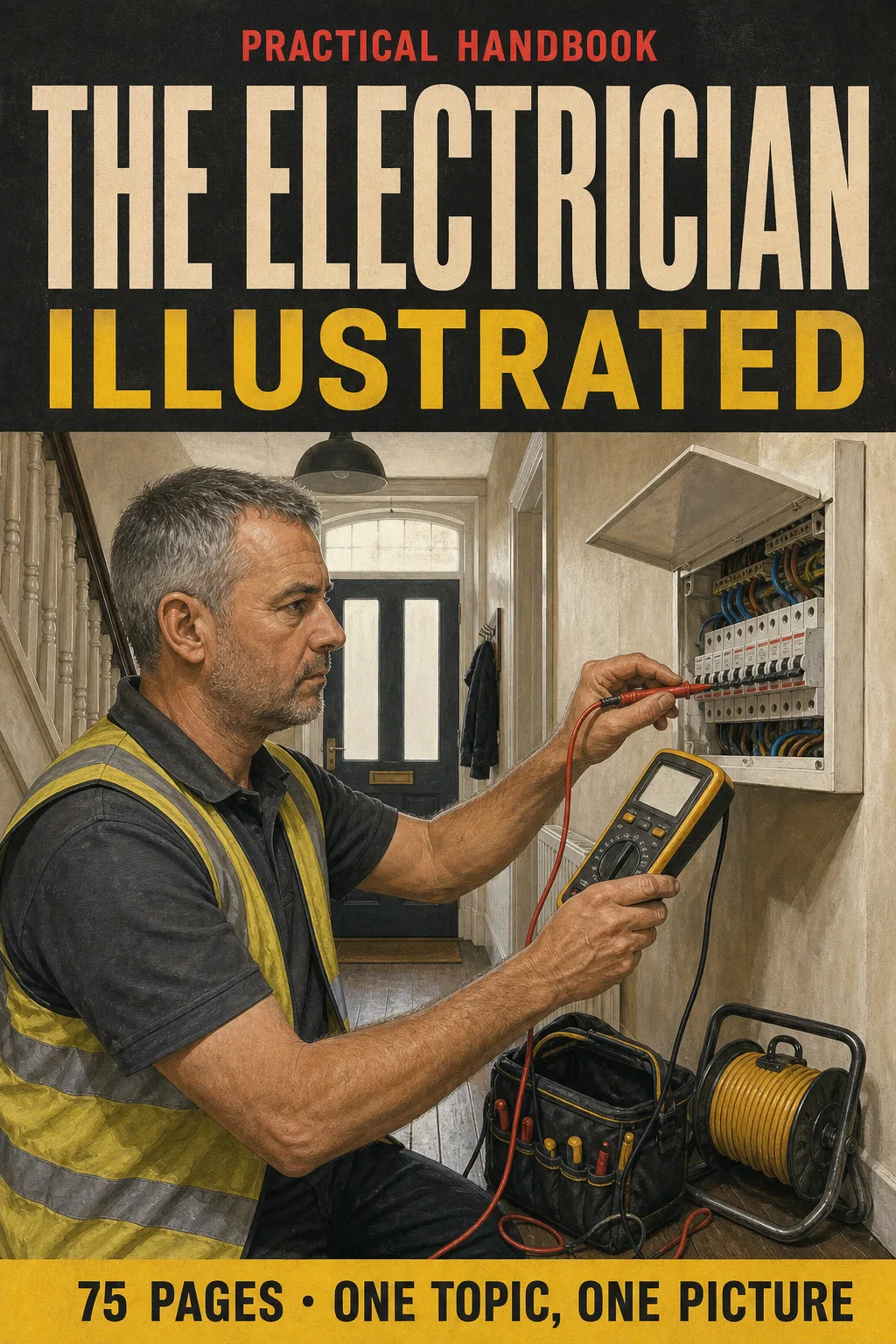
BS 7671 in Drawings: The Domestic Installation, From Cut-Out to Certificate, in the Order You Work One Topic on Every Page

Supply systems, the consumer unit, ring and radial circuits, cable sizing, earthing and bonding, bathroom zones, safe isolation, the testing sequence, max Zs values and certificates. Each topic has its own page: the drawing first, then the values you need to remember. 75 illustrated pages.

YES, I WANT THE ELECTRICIAN ILLUSTRATED

🔒 Secure checkout · PDF by email · 30-day guarantee

Every topic, its own pageEach device, circuit and test drawn, with the explanation alongside
75 illustrated pages9 parts, from the substation to your exam checklist
Up-to-date sourcesBS 7671, IET Guidance Note 3 and HSE GS38
PDF by emailFormat

Look Inside the Book

Every page has one large drawing and a box with the values and steps you need to know:

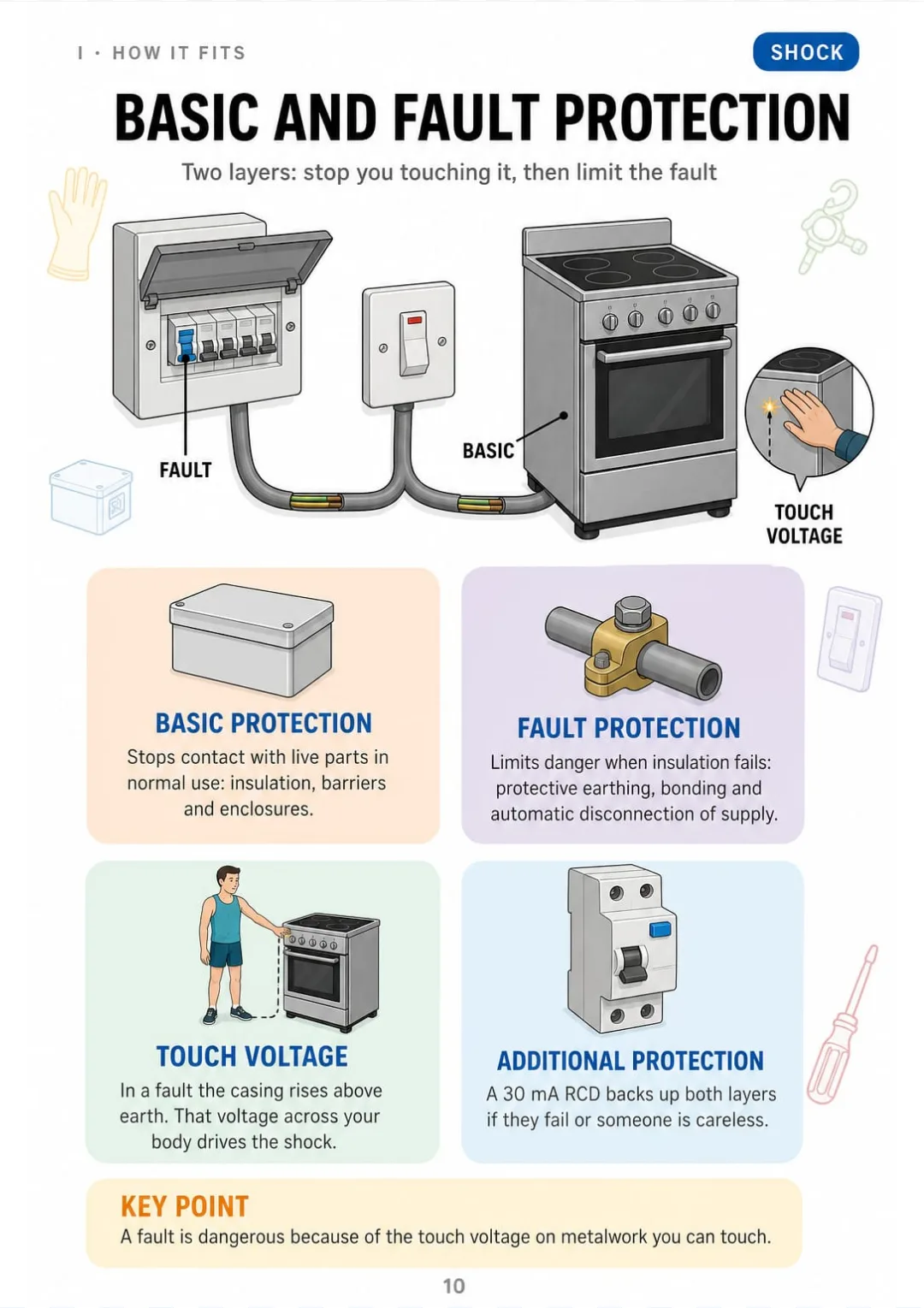
Basic protection = insulation and enclosures · fault protection = earthing, bonding, ADS
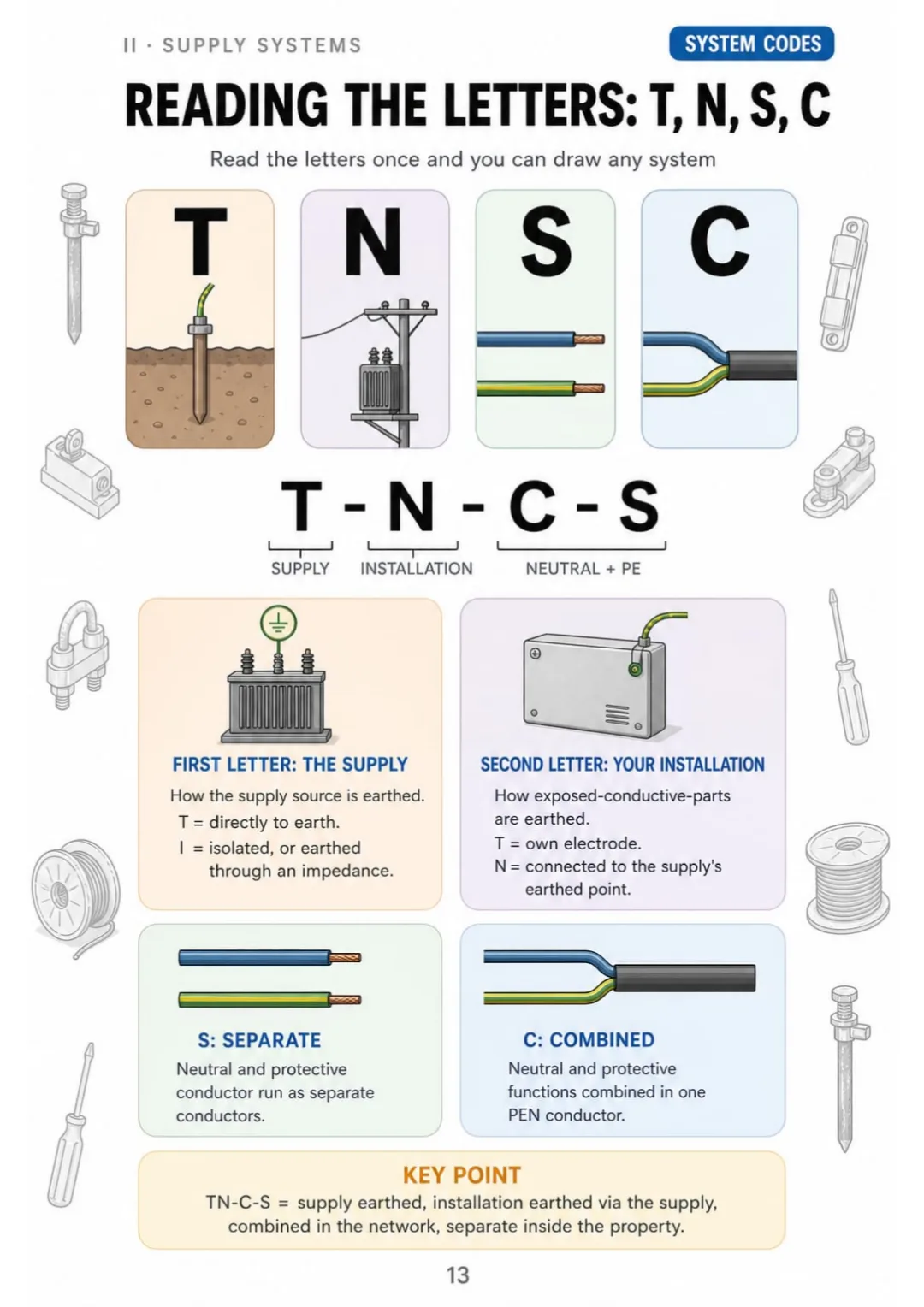
T, N, S and C decoded: first letter the supply, second letter your installation.
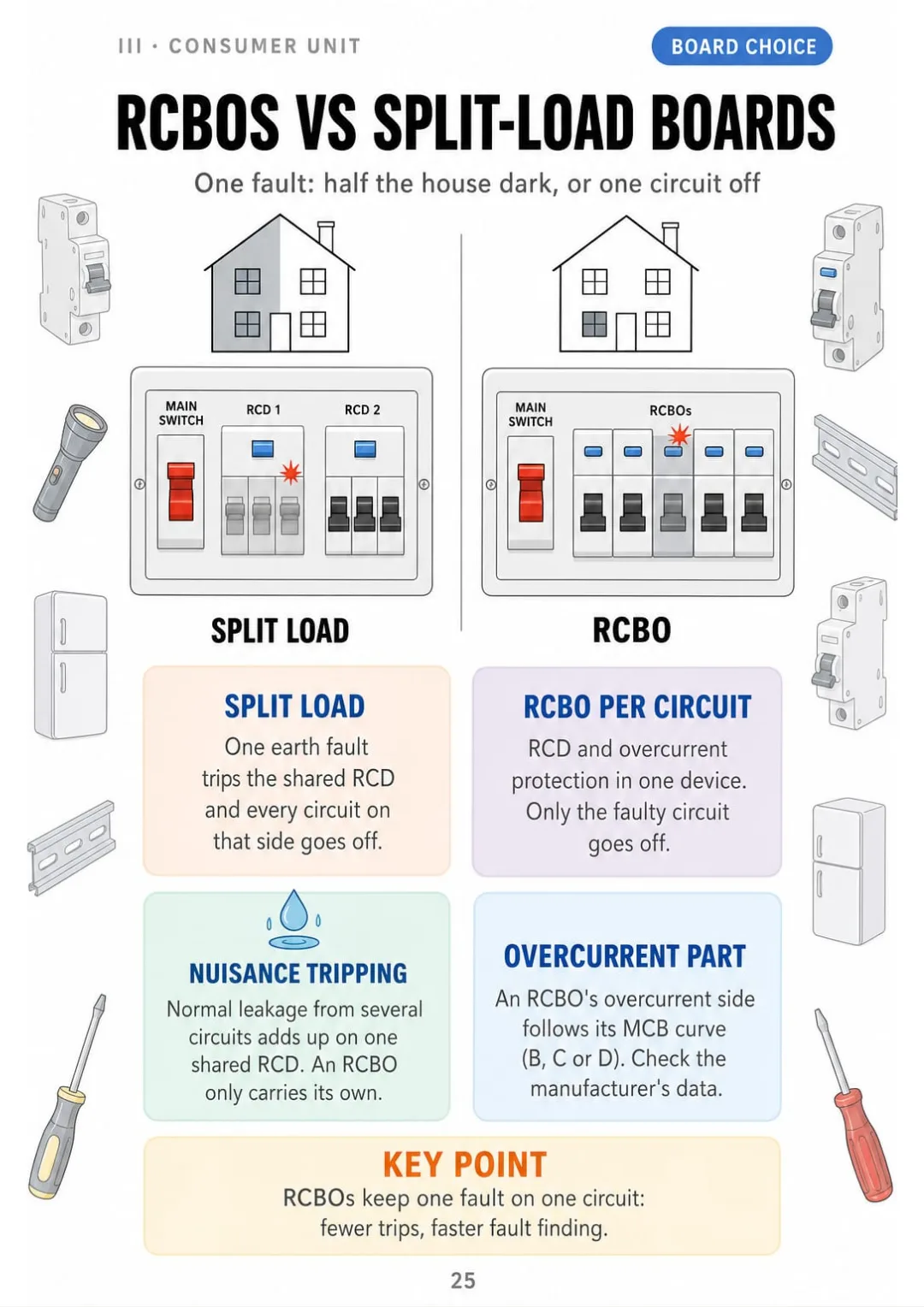
Split load: one fault, half the circuits off · RCBO: only the faulty circuit
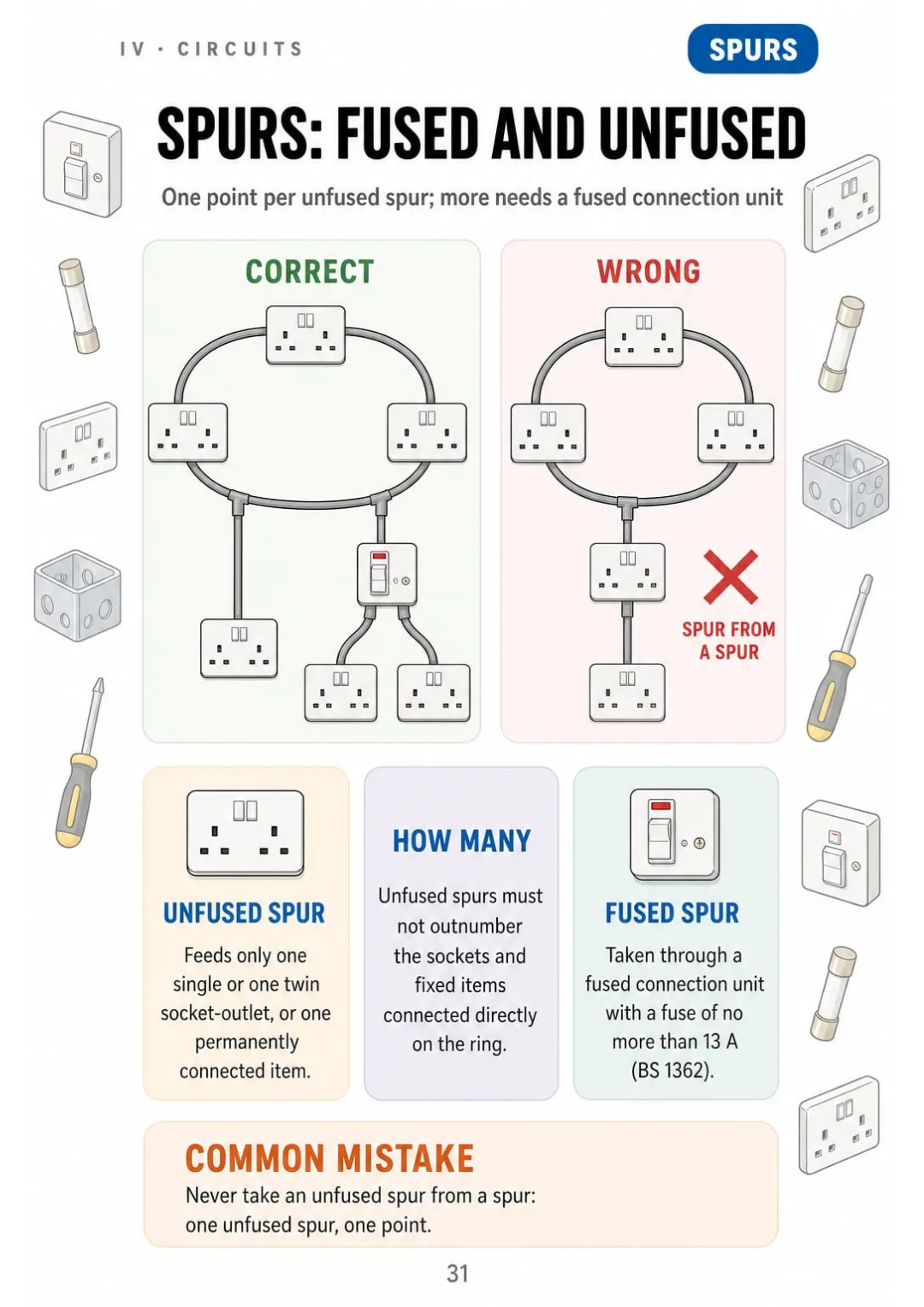
Unfused spur = one point · fused spur = FCU with a fuse no bigger than 13 A
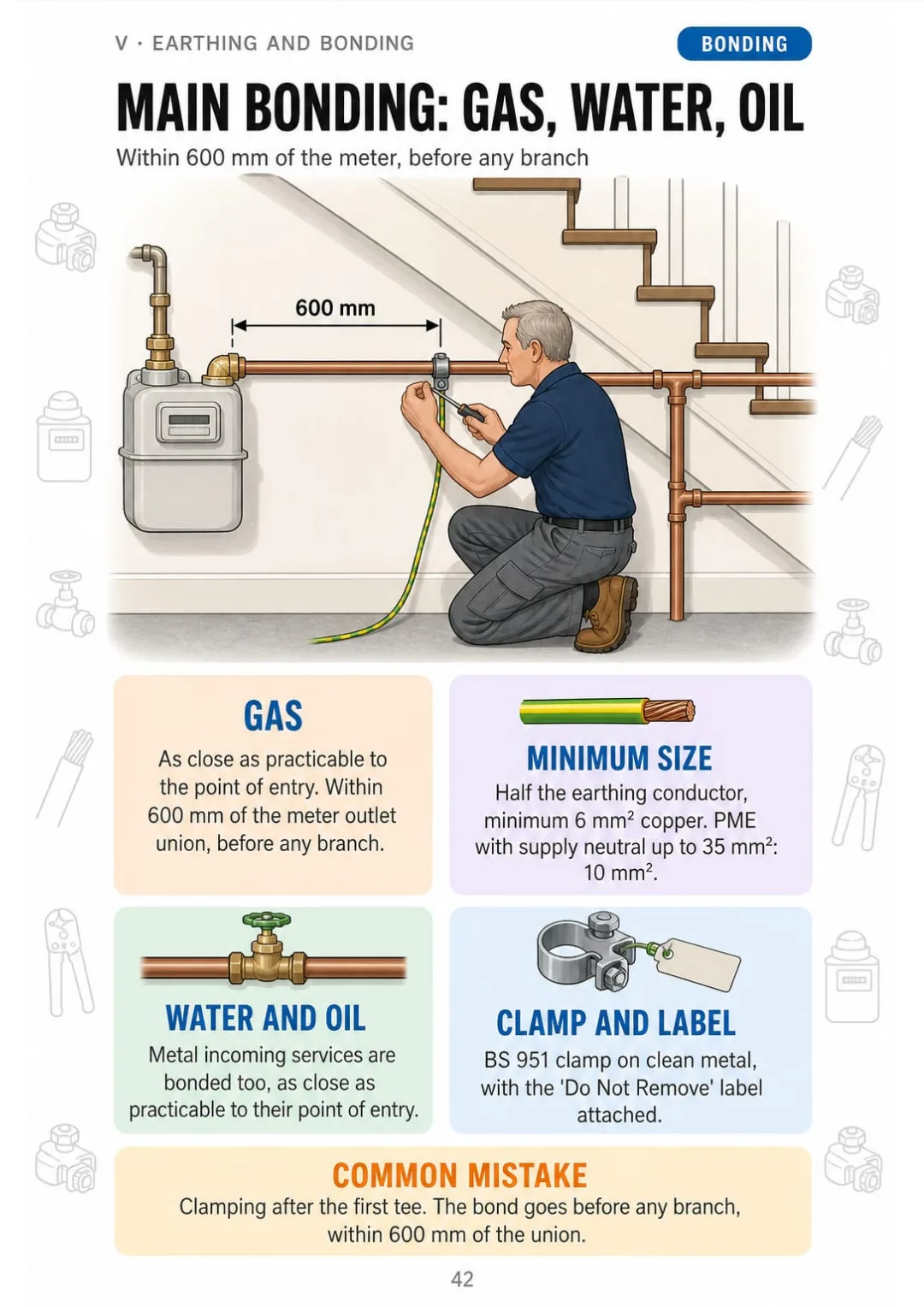
Gas bond within 600 mm of the meter union · PME (neutral ≤ 35 mm²): 10 mm² copper
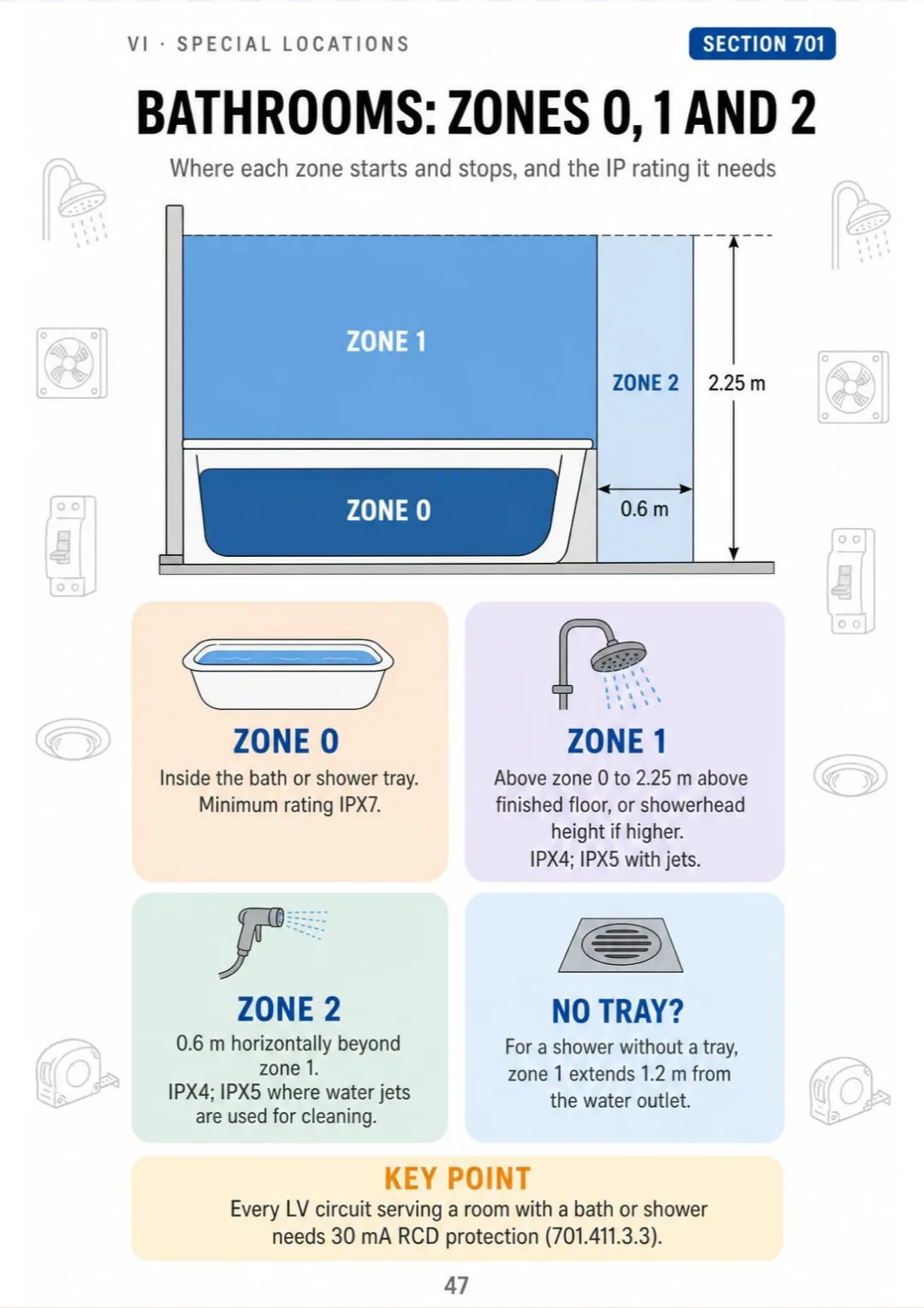
Zone 1 to 2.25 m, zone 2 out 0.6 m, IPX7 / IPX4 / IPX5
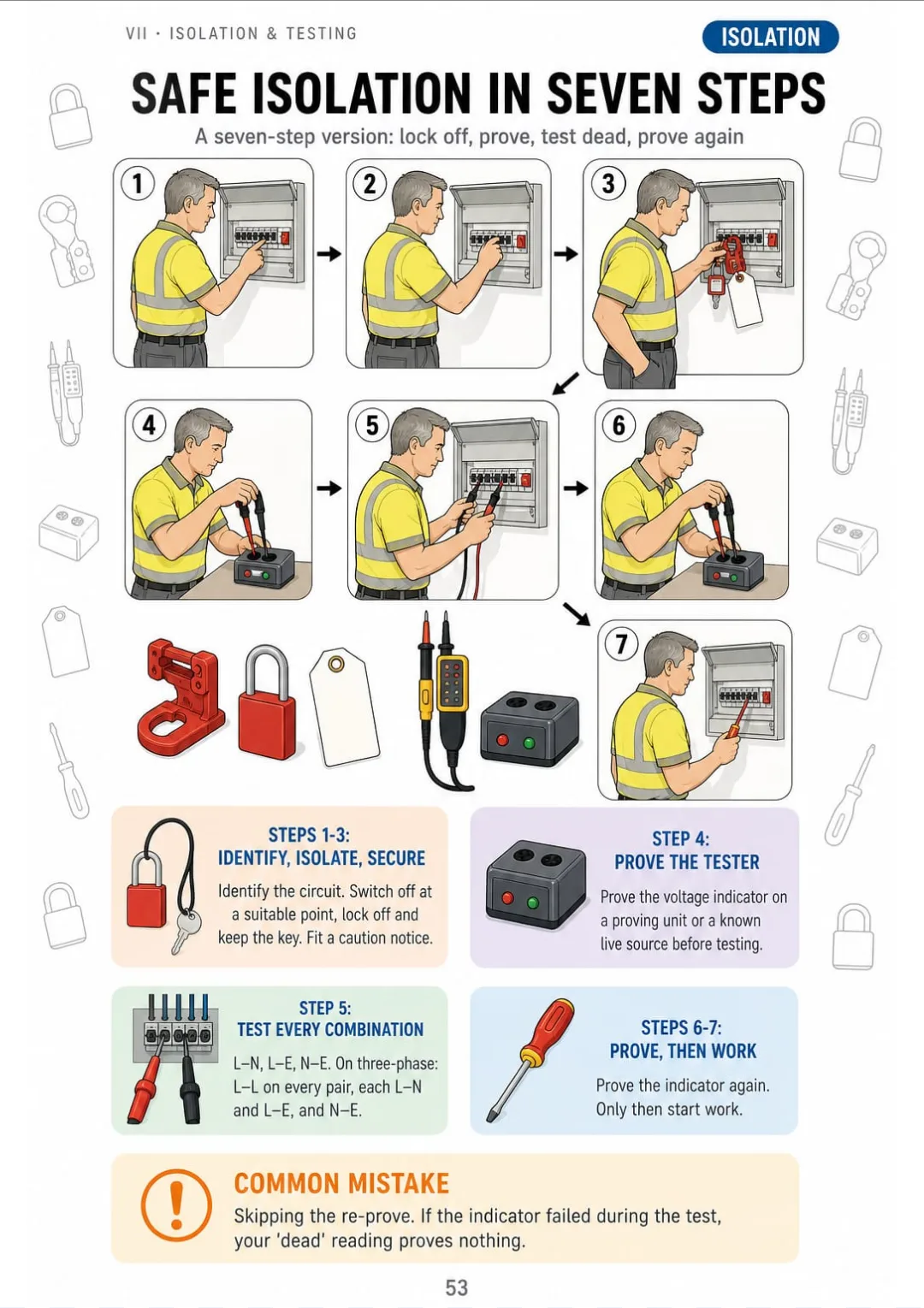
Prove the tester, test L–N, L–E, N–E, then prove the tester again
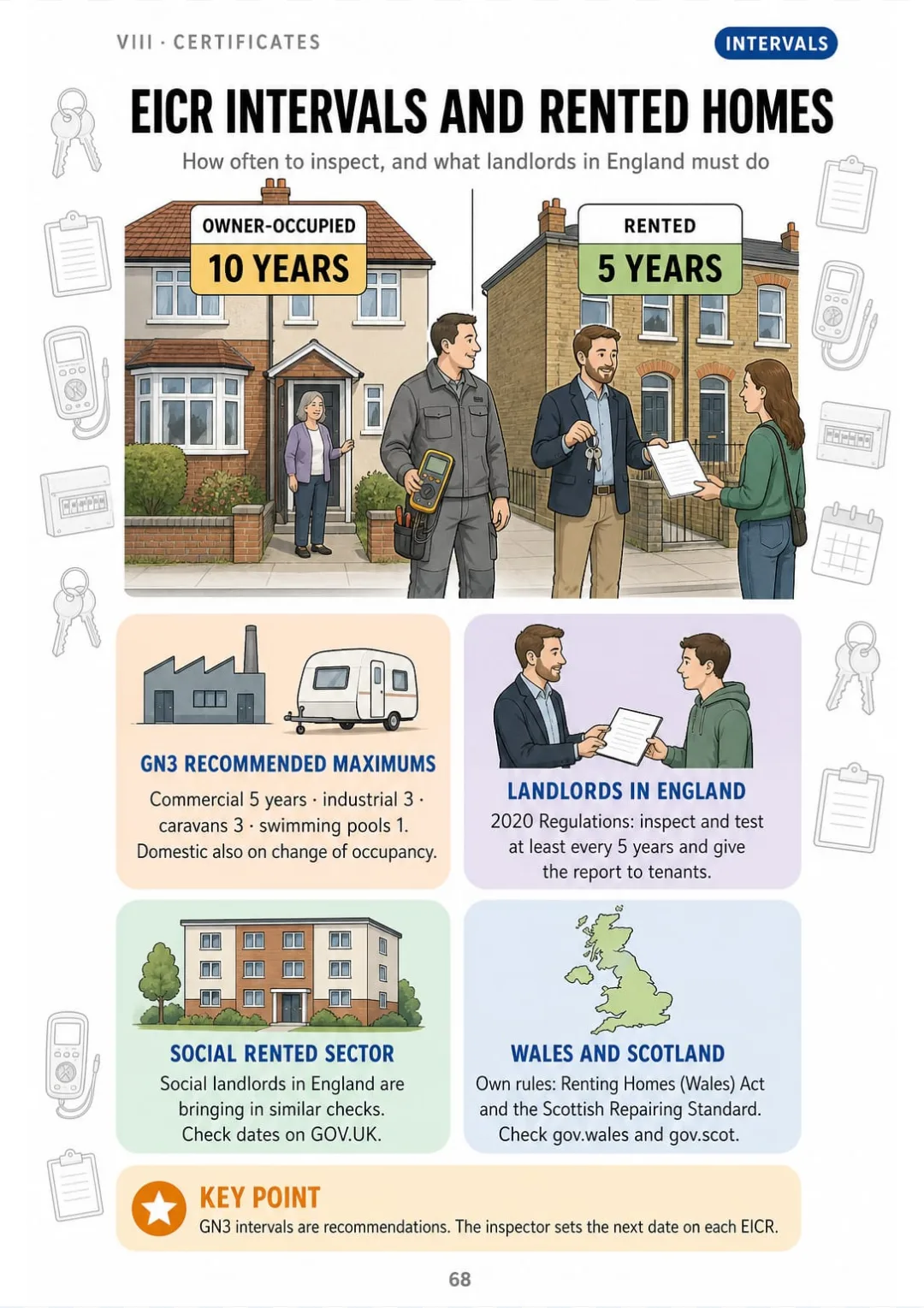
GN3: domestic 10 years, rented 5 years; landlords in England must test at least every 5 years

Swipe to see more →

These are real pages from the book. The table of contents is the full one: 9 parts and 70 topics.

The Problem Isn't You. It's How It Was Explained to You.

You're standing at an open consumer unit and the assessor asks you to talk him through it: what each device is there for, and what it protects against.

You fit boards. But in the regs and your college notes, the main switch is on one page, RCDs ten pages on and SPDs in another chapter. You've never seen them explained together, on one board.

Split load: one fault, half the circuits off · RCBO: only the faulty circuit

In the book, the consumer unit is one labelled drawing: main switch, SPD, RCBOs, AFDD, the neutral bar and the earth bar, each one with what it does written next to it.

The same goes for the three supply systems side by side, the ring final next to the radial, safe isolation in seven steps and the bathroom zones with their measurements: each one on its own page.

So when he asks, you go across the board in order and explain it, without going back to the regs to check.

COMPARE FOR YOURSELF

The Same Topic, Two Ways to Study It

THIS
  • The manual: line after line after line
  • Earthing systems explained only in words
  • You go into the exam still unsure
In a system designation, the letters describe earthing relationships. The first letter refers to the source: T where a point of the supply is connected directly to earth, I where live parts are isolated from earth or connected through an impedance. The second letter refers to the exposed-conductive-parts of the installation and how they are connected to earth. Any letters that follow, S or C, indicate whether the neutral and protective functions are provided by separate conductors or combined in a single conductor.
FOR THIS
  • Each earthing system in one drawing
  • The letters decoded in one box
  • You see it and it makes sense
T, N, S and C decoded: first letter the supply, second letter your installation.
CONTENTS

Take a Look at the 9 Parts and 70 Topics

Nine parts, in the order you'd work: the basics, supply systems, the consumer unit, circuits and cables, earthing and bonding, special locations, isolation and testing, certificates and exam review. 75 pages, all illustrated.

IHow It All Fits Together · pp. 6-12
  1. From the substation to the socket on one page
  2. Voltage, current, resistance and power
  3. Line, neutral and cpc: what each conductor does
  4. Overload, short circuit and earth fault
  5. Electric shock: basic protection and fault protection
  6. The rules behind the job: BS 7671, EAWR 1989 and Part P
  7. How BS 7671 is organised: finding a regulation fast
IISupply Systems and Earthing Arrangements · pp. 13-19
  1. Reading the letters: T, N, S and C
  2. TN-S: the earth comes from the cable sheath
  3. TN-C-S (PME): the combined neutral and earth
  4. TT: your own earth electrode
  5. The three systems side by side
  6. PME restrictions: EV chargers, caravans and outbuildings
  7. Ze, PFC and what to ask the DNO
IIIThe Consumer Unit and Protective Devices · pp. 20-28
  1. Inside a consumer unit: every device and what it is for
  2. MCBs: types B, C and D
  3. Fuses: BS 88, BS 1361, BS 3036 and BS 1362
  4. RCDs: what they measure and why 30 mA
  5. RCD types: AC, A, F and B
  6. RCBOs vs split-load boards
  7. Where 30 mA RCD protection is required
  8. SPDs and AFDDs: when they are needed
  9. Discrimination: only the nearest device should trip
IVCircuits and Cable Selection · pp. 29-39
  1. The ring final circuit drawn
  2. Radial socket circuits next to the ring
  3. Spurs: fused and unfused
  4. Lighting circuits: loop-in and junction box
  5. Two-way and intermediate switching
  6. Cookers, showers and immersion heaters
  7. Sizing a cable: Ib ≤ In ≤ Iz
  8. Correction factors: Ca, Cg, Ci and Cf
  9. Reference methods: how the cable is installed changes its rating
  10. Voltage drop: 3% for lighting, 5% for other uses
  11. Safe zones for cables in walls
VEarthing and Bonding · pp. 40-46
  1. Earthing vs bonding: two different jobs
  2. The main earthing terminal and the main earthing conductor
  3. Main protective bonding: gas, water and oil
  4. Extraneous or not? The 22 kΩ test
  5. Supplementary bonding in bathrooms: when it can be left out
  6. Disconnection times: 0.4 s, 5 s, 0.2 s, 1 s
  7. Earth fault loop impedance: Zs = Ze + (R1 + R2)
VISpecial Locations and Installation Rules · pp. 47-52
  1. Bathrooms: zones 0, 1 and 2
  2. Sockets and switches near a bath or shower
  3. Outdoors, garages and outbuildings
  4. EV charge points: the essentials
  5. Solar PV and battery storage: what changes in the board
  6. Fire, cable support and escape routes
VIISafe Isolation and the Testing Sequence · pp. 53-64
  1. Safe isolation in seven steps
  2. Your test instruments and GS38
  3. The order of tests: dead first, then live
  4. Continuity of protective conductors: R1 + R2
  5. Ring final continuity: the three steps
  6. Insulation resistance: 500 V and at least 1 MΩ
  7. Polarity: single-pole devices in the line
  8. Earth electrode resistance on TT
  9. Ze and Zs: the live loop tests
  10. Prospective fault current: PSCC and PEFC
  11. RCD testing: what to test and what reading to expect
  12. Functional testing and AFDD checks
VIIICertificates and Reports · pp. 65-69
  1. EIC, MEIWC or EICR: which one for which job
  2. Filling in the schedule of test results
  3. Observation codes: C1, C2, C3 and FI
  4. EICR in practice: periods and the private rented sector
  5. Notification and Part P
IXReview and Exam Preparation · pp. 70-75
  1. The exam and assessment routes at a glance
  2. Key numbers on one page
  3. Max Zs table for Type B, C and RCBOs drawn as a ladder
  4. The most frequent wiring mistakes, before and after
  5. The most frequent testing mistakes
  6. Before the AM2: your printable checklist

One Page, One Topic, All Clear

Think of it this way:

You've just finished a ring final and the tester is in your hand. Before you sign it off, you need to know what the readings should look like.

You open the book at the ring final page: the ring drawn as a loop, 32 A, 2.5/1.5 mm² cable, up to 100 m², both ends on one device, and the three-step continuity check a few pages on.

Gas bond within 600 mm of the meter union · PME (neutral ≤ 35 mm²): 10 mm² copper

The same with the TT earth electrode, the RCD types, the bathroom zones, the disconnection times and the C1, C2, C3 and FI codes: each one on its own page, drawn.

The Electrician Illustrated is 9 parts and 70 topics, all drawn, and it ends with the key numbers on one page, the max Zs table as a ladder and a printable checklist for the practical assessment.
What you see drawn, you don't have to memorize.

What's Inside The Electrician Illustrated:

Ipp. 6-12

How It All Fits Together

From the substation to the socket, voltage, current and power, line, neutral and cpc, the three kinds of fault, shock protection and how BS 7671 is organised.

IIpp. 13-19

Supply Systems and Earthing Arrangements

The letters T, N, S and C, TN-S, TN-C-S and TT drawn side by side, PME restrictions and what Ze and PFC tell you.

IIIpp. 20-28

The Consumer Unit and Protective Devices

Every device inside the consumer unit, drawn in place: MCB types, fuses, RCD types, RCBOs, SPDs, AFDDs, where 30 mA is needed and discrimination. So you can walk anyone through a board, device by device.

IVpp. 29-39

Circuits and Cable Selection

The ring final next to the radial, spurs, lighting and switching, cookers and showers, cable sizing, correction factors, voltage drop and safe zones.

Vpp. 40-46

Earthing and Bonding

Earthing vs bonding, the main earthing terminal, main and supplementary bonding, the 22 kΩ test, disconnection times and Zs = Ze + (R1 + R2). So you know why each conductor is there before you test it.

VIpp. 47-52

Special Locations and Installation Rules

Bathroom zones 0, 1 and 2, outdoors and outbuildings, EV charge points, solar PV and batteries, and fire and cable support.

VIIpp. 53-64

Safe Isolation and the Testing Sequence

Safe isolation in seven steps and GS38, then the tests in the order you carry them out: continuity, insulation resistance, polarity, loop impedance, fault current and RCD. So the tester in your hand has a sequence.

VIIIpp. 65-69

Certificates and Reports

EIC, MEIWC or EICR, the schedule of test results, observation codes, EICRs in the private rented sector and Part P notification.

IXpp. 70-75

Review and Exam Preparation

The exam and assessment routes, the key numbers on one page, the max Zs ladder, the most frequent wiring and testing mistakes and a printable checklist.

At the end of the book: The key numbers on one page, the max Zs table as a ladder and a printable checklist for the practical assessment.
Plus: 2 Free Books

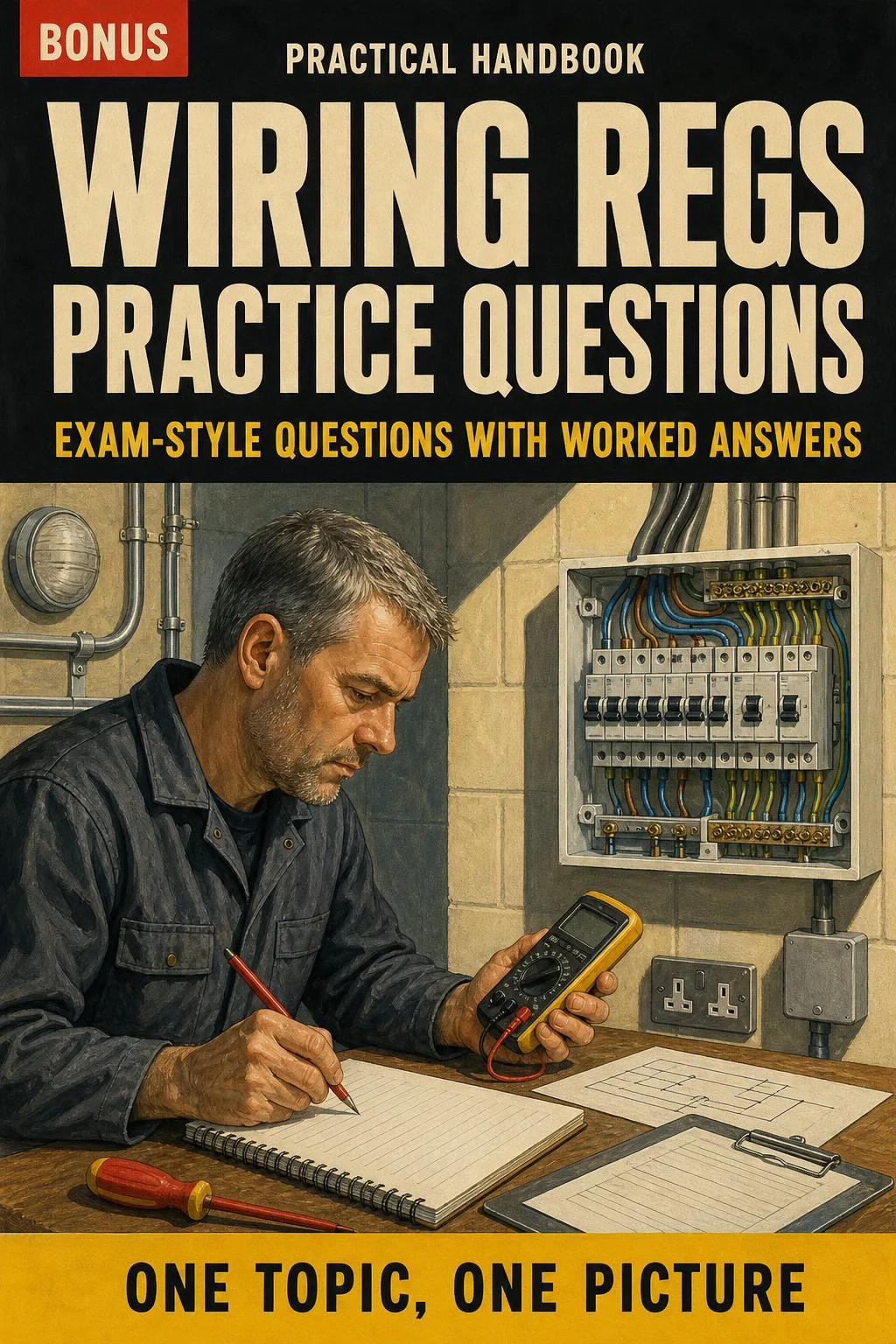
Wiring Regs Practice Questions: Exam-Style Questions with Worked Answers

BONUS 1: «Wiring Regs Practice Questions: Exam-Style Questions with Worked Answers»

Value on its own: US$ 17.90

Test yourself on circuits, protection, earthing and testing, and see why each answer is right, so you find your gaps before the exam does.

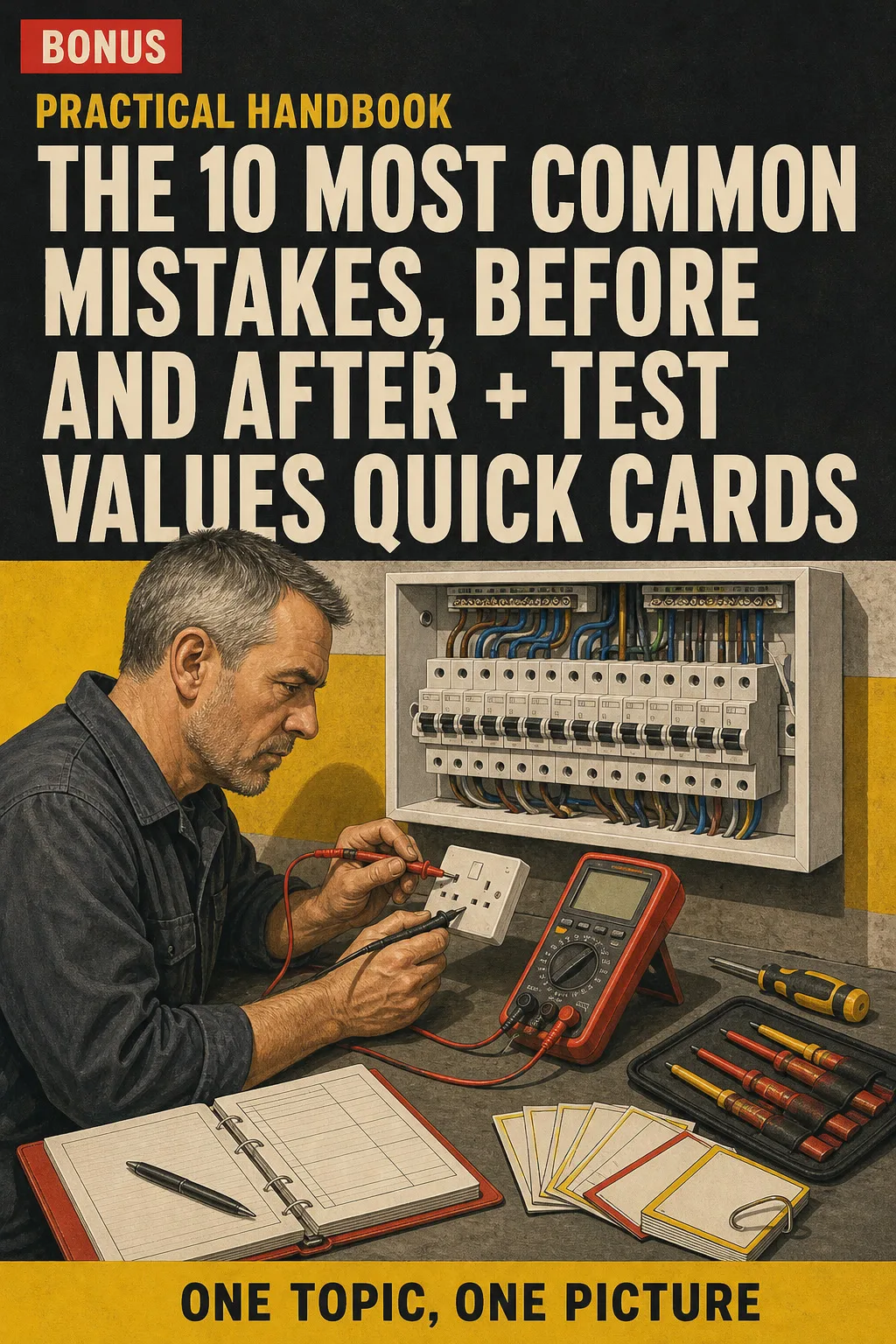
The 10 Most Common Mistakes, Before and After + Test Values Quick Cards

BONUS 2: «The 10 Most Common Mistakes, Before and After + Test Values Quick Cards»

Value on its own: US$ 14.90

See the most frequent wiring and testing mistakes drawn side by side with the correct version, plus one-page cards of the typical test values to print and keep in the van.

The Electrician Illustrated with 2 Free Books

  • The Electrician Illustrated: 75 illustrated pagesUS$ 63
  • BONUS 1: Wiring Regs Practice Questions: Exam-Style Questions with Worked AnswersUS$ 17.90
  • BONUS 2: The 10 Most Common Mistakes, Before and After + Test Values Quick CardsUS$ 14.90
  • High-resolution PDF to printIncluded
Total value US$ 95.80
YOUR PRICE:
US$ 27
You save US$ 68.80
YES, I WANT THE ELECTRICIAN ILLUSTRATED FOR US$ 27

📄 This is a digital PDF book sent to your email: nothing is printed or shipped.

Secure purchaseEncrypted payment30-day guarantee

PDF by email: We email you The Electrician Illustrated as a PDF, together with the two free books. It's a single payment: no installments, no extra charges.

Who This Book Is For

You're on your Level 2 or 3 course

You're on your Level 2 or 3 course

You study in the evenings after work. Each topic sits on one page, drawn, so you can go over it in the same order every night.

Your exam or assessment is coming up

Your exam or assessment is coming up

The test sequence, the typical values and the key numbers are on a handful of pages you can go over the week before.

You already work as an electrician

You already work as an electrician

You know the job. The book puts the regs, the tests and the certificates in a single sequence, ready for a re-sit or the next amendment, and ready to print for the van.

Everything You Get Today

US$ 95.80US$ 27
YES, I WANT THE ELECTRICIAN ILLUSTRATED FOR US$ 27

📄 This is a digital PDF book sent to your email: nothing is printed or shipped.

30DAYS
GUARANTEE

30-Day Guarantee

Try The Electrician Illustrated for 30 days, bonus books included.

We refund everything if the file won't open, if the book isn't what you see here, if you were charged twice or if the email doesn't arrive. Just email us.

You pay once. No subscriptions.

Frequently Asked Questions

Is it for me if I already work as an electrician?

Yes. It doesn't explain what a socket is. It sets out supply systems, the board, circuits, earthing, testing and certificates in a single sequence, each one drawn. It's built for the BS 7671 wiring regs exam (such as C&G 2382), inspection and testing (such as 2391) and the final practical assessment (such as the AM2), and it also works if you're on a Level 2 or 3 course.

Where does the content come from?

It's checked against BS 7671:2018+A3:2024 (the 18th Edition with Amendment 3), the IET On-Site Guide, IET Guidance Note 3, HSE GS38 and the Electricity at Work Regulations 1989, using UK units: 230 V, 13 A, mm², Ω and MΩ.

Is it official material?

No. It's an independent study guide. It isn't published or approved by the IET, BSI or any awarding body.

I've already got the regs book and my college notes. What does this add?

The regs tell you what's required, and your notes follow the course. This book puts it all in a single sequence, one topic per page, each one drawn: the board, the circuits, earthing, the test sequence and the max Zs values side by side. It goes alongside your course, BS 7671 and your practical training. It isn't a qualification and doesn't give you a certificate.

Are the practice questions the ones from the exam?

No. They're exam-style questions written for this book, with worked answers. They aren't official questions from any exam.

When and how will I receive it?

As a PDF by email, sent to the address you enter when you pay.

Do I have to pay every month?

No. It's a one-off payment, with no subscription.

Can I have it on paper?

Yes. The PDF is ready to print, whether you want the whole book or just the pages you keep in the van.

How does the refund work?

You have 30 days. We refund everything if the file won't open, if the book isn't what you see on this page, if you were charged twice or if the email doesn't arrive: just email us.

Before You Close This Page

No more rereading the regs with nothing sticking.

The board, the ring and the test order: you see them drawn and that's it.

You walk into the exam knowing where everything is.

Drawings make studying faster.

The book is right below.

One-time payment: US$ 27 · Guarantee: 30 days · PDF by email

YES, I WANT THE ELECTRICIAN ILLUSTRATED FOR US$ 27

📄 This is a digital PDF book sent to your email: nothing is printed or shipped.